CELL STRUCTURE · MATCHED
What TB-500 May Change Inside a Cell
Thymosin beta-4 has a short stretch that holds actin in a 1:1 match, one part to one part. That lab finding doesn't prove the chain repairs an injury in you.
How parts 17-23 of thymosin beta-4 hold actin
A lab study measured how a short stretch of thymosin beta-4 holds actin [1]. TB-500 copies that stretch from positions 17 through 23. A lab name for the stretch includes 2, which sorts it into a group. The number doesn't rate strength.
A cell relies on actin for its shape and movement. Full thymosin beta-4 stores some actin until the cell needs it [2]. Your cells do this work on a scale too small to see.
TB-500 is the seven-part chain that carries this grip. It may alter cell movement. Most repair studies did not use that small chain. Remember that limit when judging a claim.
How TB-500 changes the actin a cell can use
Thymosin beta-4 can hold one loose actin part in a 1:1 match [1][2]. Think of actin as stock kept for later use. The grip changes how much a cell can use at once.
An X-ray study joined actin, thymosin beta-4, and 1 part of another protein. At 2 angstroms, an atom-sized scale, the image showed thymosin beta-4 covering both ends of actin [1]. Actin then couldn't grow into a longer strand.
A review tied the whole protein to tissue repair [4]. That claim sounds tidy. Yet the seven-part chain hasn't shown equal repair in a human study [10].
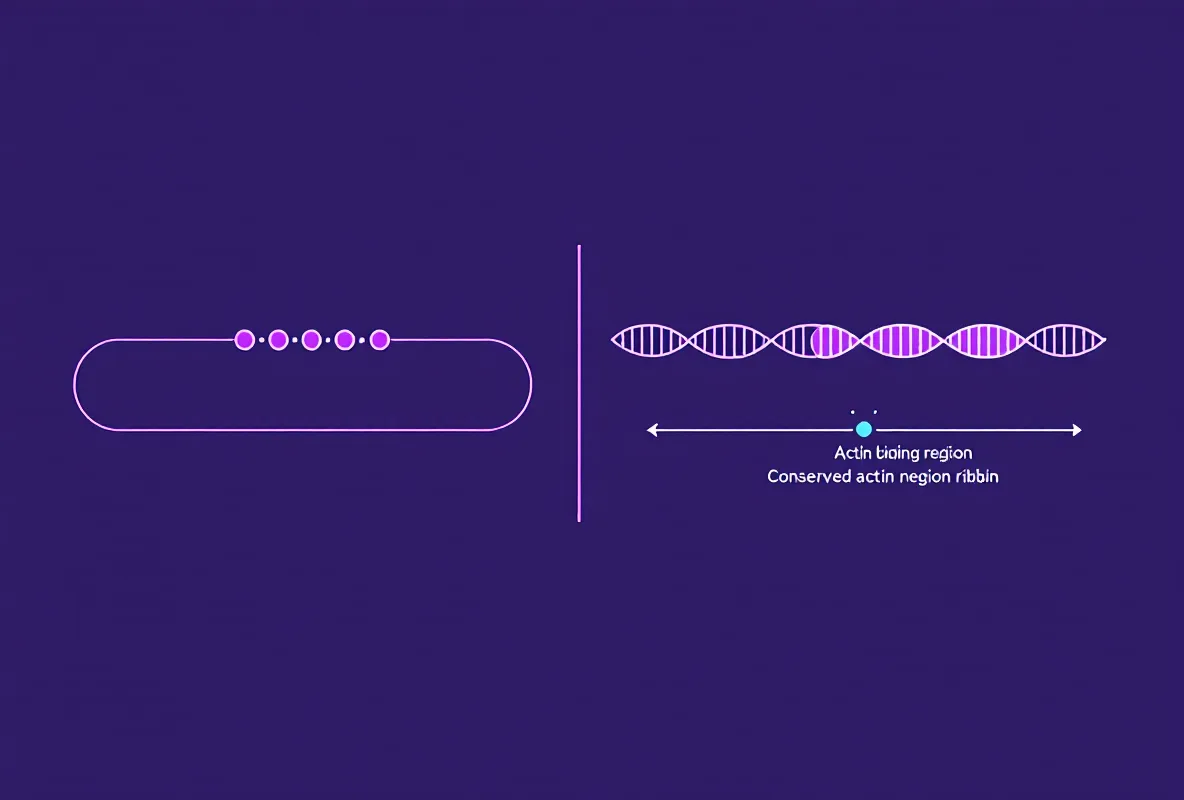
What TB-500 keeps and leaves out from thymosin beta-4
Positions 17 through 23 form the 7-amino-acid chain called TB-500 [1][5]. Full thymosin beta-4 has forty-three linked parts. The full protein weighs near 4963 daltons and the short chain about 889 daltons [5]; chemists use this scale for tiny molecules, so the chain is much smaller.
Lab papers give the full protein several long names. You don't need those names to see the key point. The short chain keeps the actin grip but leaves out other parts. Those missing parts may have effects of their own.
What the TB-500 amino acid sequence contains
Seven amino acids form the chain. Each is a protein part. The chain weighs about 889 daltons, a scale chemists use for unseen molecules [1]. Its order won't tell you if an injury heals.
This part of thymosin beta-4 holds actin. Each of its seven units has a long lab name. Those names won't help you judge the studies. The result matters more than the spelling.
What full thymosin beta-4 may do that TB-500 does not
TB-500 is the seven-part short chain. It weighs about 889 daltons. Full thymosin beta-4 weighs about 4963 daltons [1][5]; chemists use daltons to weigh things too small to see, so these figures show the short chain is smaller.
The short chain leaves out other parts of the full protein [5]. The whole protein reached a Phase 1 human study [10]. The short chain didn't. We can't assume the two act the same in you.
What the small piece changed in wounded mice
One study tested a lab-made chain from thymosin beta-4. The chain held actin. Wounds healed better in mice with diabetes and in old mice [3].
That result gives the TB-500 claim some footing. The short chain helped mouse wounds heal. It doesn't prove that the seven-part chain matches full thymosin beta-4.
The animals weren't people, and the study didn't test your knee or tendon. The full protein may work through parts that the smaller chain lacks. The mouse result is useful, but it isn't a human answer.